Last Updated on August 27, 2026 by Eric Bonneman
September fishing in Gulfport and the Biloxi Marsh is where late summer starts handing the keys to fall. The heat is still real, the tropics still deserve respect, and afternoon weather can still get cranky, but the fishery begins to shift in a very useful direction. Shrimp start moving, mullet schools become more important, redfish feed aggressively, speckled trout begin setting up on better current and cleaner water, and nearshore opportunities can still fire when the Gulf gives us a calm window.
For our trips, September is all about matching the charter to the day. A protected Louisiana Marsh fishing charter is often the best call for redfish, speckled trout, flounder, black drum, and mixed-bag action. A calm forecast can open the door for a Mississippi nearshore fishing charter around markers, bait pods, trap lines, barrier island edges, and open-water current. Anglers wanting one big bite can also look at Mississippi and Louisiana tarpon fishing charters while the late-summer and early-fall window is still alive.
Compared with August fishing in Gulfport and the Biloxi Marsh, September usually gives us a little more transition energy. The fish are still influenced by heat, but the first changes in bait movement and day length can make the marsh feel more alive. September is not full fall yet. It is the awkward but productive middle child of the calendar, and somehow it catches fish.
How September Conditions Shape the Fishery
September rewards flexibility. Early in the month, many patterns still look like summer: early starts, heat management, and weather awareness. By late September, the first stronger fall movements begin to show. Shrimp flush from marsh ponds on falling water, mullet schools tighten, redfish begin schooling more consistently, and trout start using drains, points, shell, and bayou mouths more predictably.
| September Variable | Effect on the Fish | Best Adjustment |
|---|---|---|
| Late-summer heat | Shallow water can still warm quickly, especially early in the month. | Start early and fish the best moving tide before the sun climbs too high. |
| Shrimp movement | Falling tides pull shrimp and baitfish from ponds, drains, cuts, and grass edges. | Prioritize pond mouths, bayou drains, current seams, and shell edges where bait is being funneled. |
| Mullet schools | Redfish, sharks, jack crevalle, and other predators follow concentrated bait. | Watch for nervous water, surface pushes, birds, wakes, and feeding activity before settling into an area. |
| Water clarity | Wind, storms, and tide stage can change visibility quickly. | Move until you find cleaner water, protected shorelines, or structure still holding bait. |
| Nearshore weather windows | Tripletail, Spanish mackerel, sharks, tarpon, and other nearshore targets become more realistic during calm periods. | Use stable forecasts to check markers, floating structure, bait pods, and barrier island edges. |
| Tropical weather | September sits near the peak of Atlantic hurricane season. | Keep plans flexible and let safety, wind, seas, and radar decide the final route. |
The September game plan is simple: fish the best tide, follow the bait, and do not argue with the weather. Arguing with Gulf weather is how tiny thunderstorm goblins win.
- Primary marsh targets: Redfish, speckled trout, flounder, black drum, sheepshead, and mixed-bag inshore species.
- Primary nearshore targets: Tripletail, Spanish mackerel, sharks, jack crevalle, bull redfish, and seasonal tarpon opportunities.
- Primary water types: Marsh ponds, drains, bayou mouths, shell points, grass edges, sandy pockets, barrier island shorelines, markers, trap lines, bait pods, and nearshore structure.
- Primary baits and lures: Live shrimp, croakers, pogies, mullet, cut bait, soft plastics, popping corks, topwater plugs, suspending baits, spoons, jigs, and fast-moving metal lures for mackerel.
- Primary planning risk: Forcing a fixed plan when tide, wind, water clarity, or tropical weather clearly says to adjust.
Best September Fishing Patterns
Redfish in Marsh Ponds, Drains, and Shoreline Edges
Redfish are one of the most dependable September targets in the Biloxi Marsh and along the Mississippi Gulf Coast. As bait begins shifting and tides pull food through the marsh, redfish become easier to pattern around pond exits, grassy shorelines, shell points, drains, and shallow flats.
A falling tide can be especially productive. When water leaves the ponds, shrimp, crabs, mullet, and small baitfish get pulled through narrow exits. Redfish may hold at the mouth of the drain, just off the current edge, on nearby shell, or along the first deeper break outside the pond.
Higher water can spread fish across grass lines and flooded edges. Lower water can concentrate them in cuts, potholes, and drains. That means the best spot at 7:00 a.m. may not be the best spot at 9:30 a.m. September fishing is a moving puzzle, not a chair-sitting contest with rods.
Live bait, cut bait, spoons, spinnerbaits, soft plastics, and weedless paddletails can all work depending on water clarity and fish behavior. In clean water, quiet boat positioning and accurate casts matter. In stained water, scent, vibration, and repeated presentations through the feeding lane can be the difference.
For anglers focused on redfish, the guide to the best months to catch redfish in Louisiana and Mississippi gives a broader look at how this fishery changes through the year.
Speckled Trout on Current, Shell, and Cleaner Water
September can be a very good transition month for speckled trout. Early in the month, trout may still feed best during the cooler morning window. As conditions begin leaning toward fall, trout become more consistent around current-facing points, shell pads, bayou mouths, grass edges, deeper drains, and cleaner water lanes.
The key is finding life. Slicks, birds, shrimp jumping, bait pushing, light surface strikes, and clean current are all signs worth paying attention to. A point with moving water and bait deserves time. A pretty shoreline with no bait may only be pretty. Fish are rude like that; they refuse to honor scenery.
Topwater plugs can produce exciting strikes during low light, especially when trout are feeding shallow. Soft plastics, suspending baits, live shrimp, and popping cork rigs can all be effective as the sun gets higher or fish slide slightly deeper.
Controlled drifts are important. Once trout are found, reset upcurrent and work the same lane carefully instead of repeatedly driving across the bite. The fish are there because the water has food, movement, and comfort. The boat does not need to mow the lawn.
For more detail on the fall trout pattern, read our guide to fall spotted seatrout and gator trout in the Biloxi Marsh.
Flounder Around Ambush Edges
September is a smart month to pay attention to flounder. These fish use bottom changes, sandy pockets, creek mouths, drain edges, grass transitions, and current-swept cuts where bait is forced close to the bottom.
Flounder fishing is usually slower and more deliberate than chasing trout or redfish. Soft plastics, live bait, shrimp, and small baitfish worked near bottom can all produce. The bite may feel like a thump, pressure, or sudden weight rather than a dramatic strike. That is normal. Flounder are ambush predators, not motivational speakers.
As fall approaches, flounder movements become more important around passes, cuts, and deeper travel lanes. September can be a good time to target them before later fall closures or seasonal regulation changes become a bigger planning factor in some waters.
Tripletail Around Markers, Trap Lines, and Floating Structure
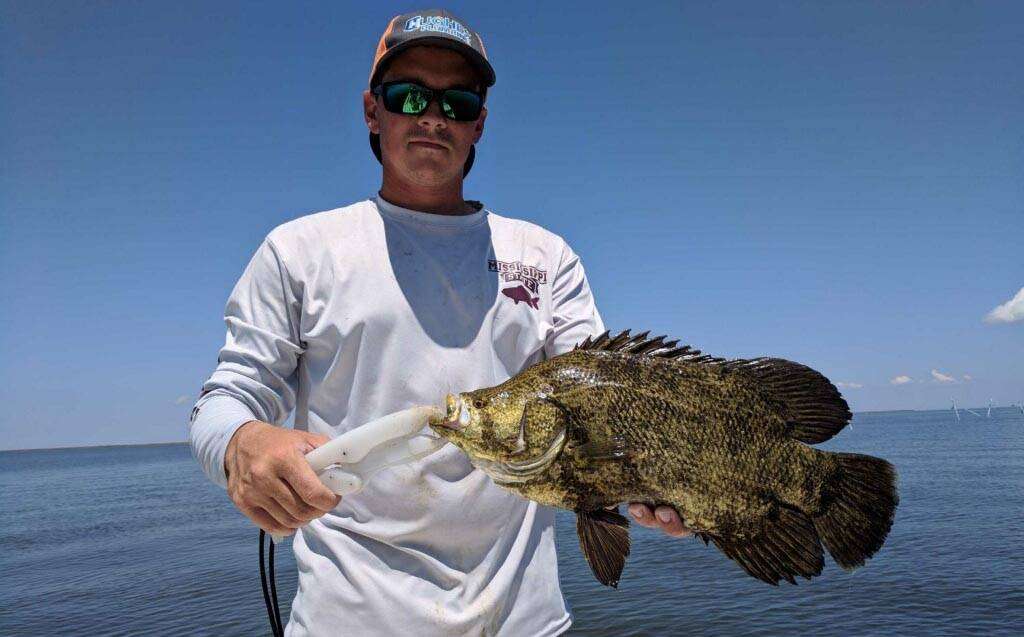
Tripletail remain one of the most interesting September targets when nearshore conditions cooperate. These fish often hold near crab trap floats, channel markers, buoys, pilings, debris, and other floating or vertical structure.
Calm water makes tripletail fishing much easier because fish are more visible and boat positioning is cleaner. Many tripletail are spotted before they are caught. Some look like a leaf. Some look like a shadow. Some look like nothing at all until the “nothing” eats a bait and bends the rod.
The first cast matters. A live shrimp, small baitfish, jig, or compact artificial presented naturally near the fish usually has a better chance than a rushed cast that lands directly on top of it. Accurate presentations and a quiet approach are more important than covering water at full speed.
This pattern fits naturally into a nearshore fishing charter off the Mississippi Coast when wind, waves, and visibility line up.
Spanish Mackerel, Sharks, Jacks, and Nearshore Action
When bait stacks up near beaches, passes, barrier islands, markers, current lines, or open-water edges, September nearshore fishing can produce fast action. Spanish mackerel often reveal themselves with birds, showering bait, and sharp surface strikes. Small spoons, metal jigs, and fast-moving baitfish-style lures are effective when worked along the edge of the school.
Sharks and jack crevalle may also show up around bait concentrations. These are strong, aggressive fish that can turn a calm-looking morning into a full-contact situation quickly. Jacks in particular tend to arrive like chaos with fins.
Nearshore plans should always be condition-based in September. A calm morning can make markers, trap lines, and bait pods worth checking. A windy morning may make protected marsh water the smarter and more comfortable plan.
Late-Season Tarpon Opportunities
Tarpon can still be part of the September conversation in Mississippi and Louisiana waters, especially early in the month and during the right weather window. These trips are different from standard inshore fishing. They require patience, heavier tackle, careful boat handling, good conditions, and a willingness to trade steady numbers for a shot at one unforgettable fish.
Tarpon may travel near open-water routes, passes, bait concentrations, and current lines. Calm conditions help with spotting rolling or feeding fish, but bait position and tide movement often determine whether the hunt makes sense.
A tarpon trip is best for anglers who understand the goal. This is not a guaranteed cooler-filling trip. It is a big-fish hunt. When it works, it produces the kind of memory that makes every normal fish look slightly embarrassed.
What About Red Snapper in September?
Red snapper requires a careful planning note because the rules are season-specific and depend on the vessel, permit type, landing state, and water being fished. Under current 2026 Mississippi rules, the private recreational and state for-hire red snapper season closed July 5. Federally permitted for-hire reef fish vessels follow a separate federal Gulf season, which NOAA announced for June 1 through October 26, 2026.
That means red snapper should not be treated as an automatic September option. Any snapper-focused trip must be confirmed before booking based on the current season, permit requirements, landing rules, weather, and charter format.
Anglers interested in this seasonal fishery can review our Mississippi red snapper fishing charters, then confirm current availability directly before planning around snapper. Regulations should also be checked through the Mississippi Department of Marine Resources red snapper information and the NOAA federal for-hire red snapper season announcement.
Which September Charter Should You Book?
Louisiana Marsh Fishing
A marsh trip is usually the most flexible September option. The Biloxi Marsh gives us protected water, redfish, speckled trout, flounder, black drum, sheepshead, and mixed-bag action. It is also the best fallback when open-water wind or tropical weather makes nearshore fishing less comfortable.
Choose a marsh trip when the goal is steady inshore action, tide-based fishing, and the ability to move among ponds, drains, points, grass edges, bayous, and shell throughout the day.
Mississippi Nearshore Fishing
A nearshore trip makes sense when the Gulf is calm enough to fish more open water efficiently. September nearshore fishing can include tripletail, Spanish mackerel, sharks, jacks, bull redfish, and other species around bait, current, markers, and floating structure.
Choose nearshore fishing when the forecast supports checking open-water targets while still keeping the marsh available as a backup plan.
Tarpon Fishing
A tarpon charter is the right choice for anglers who want a serious big-fish opportunity. These trips are more technical and patience-driven than general inshore trips, but the payoff can be enormous when the fish and conditions line up.
Choose tarpon when one big bite matters more than steady action and when weather, water clarity, bait location, and tide timing all support the hunt.
Family Fishing
A family fishing charter is usually the best September option when the group includes children, beginners, or guests who want a fun, comfortable day on the water. Redfish, trout, drum, flounder, and mixed-bag species can keep rods bent without requiring advanced casting skills.
The best family trip is not always the longest run or the most technical target. It is the trip that keeps everyone engaged, safe, and smiling while still giving anglers a real shot at quality fish.
Wade Fishing and Barrier Island Trips
When conditions are right, wade fishing charters around the Chandeleur Islands and Mississippi Barrier Islands can be an exciting September option. Speckled trout, redfish, flounder, pompano, Spanish mackerel, and seasonal tarpon can all be part of the mix.
Wade fishing is best for anglers who enjoy a hands-on style of fishing in shallow, productive water. It requires the right weather, the right group, and a plan that respects wind, tide, bottom conditions, and safety.
September Weather and Trip Timing
September is a transition month, but it is still Gulf Coast storm season. NOAA identifies September 10 as the climatological peak of Atlantic hurricane season, with most activity occurring between mid-August and mid-October. That does not mean every September trip is stormy. It means flexibility matters.
Morning trips are often the best choice. The air is cooler, fish may feed better before the sun gets high, and storms are usually less developed earlier in the day. A strong tide can extend the bite, but the first half of the day usually deserves the most respect.
Some September mornings set up beautifully for nearshore fishing. Others clearly favor the marsh. A good plan is not carved into stone. It is written in pencil, checked against the tide and forecast, and kept away from the tiny weather gremlin that lives inside every tropical month.
For broader seasonal context, review NOAA’s Atlantic tropical cyclone climatology before planning around peak hurricane season.
September Fishing Regulations to Keep in Mind
Because we fish Mississippi and Louisiana waters, regulations can vary by where the trip goes and what species are targeted. Size limits, bag limits, seasons, reef fish rules, reporting requirements, and licensing rules can change.
Before keeping fish, review the current Mississippi recreational saltwater catch limits and current Louisiana recreational saltwater finfish regulations. Fish laws are not the place for guesswork. That is how the paperwork kraken wakes up.
For Mississippi charters, our charter license covers guests. For Louisiana charters, guests need the proper Louisiana charter permit. The fishing charter FAQ explains the basic licensing expectations, and we can help point you in the right direction when planning your trip.
What to Bring on a September Fishing Charter
- Drinks and snacks: September can still be hot, and hydration matters.
- Polarized sunglasses: Helpful for seeing bait, glare lines, bottom changes, and fish movement.
- Hat and sun-protective clothing: Lightweight long sleeves are useful even as fall approaches.
- Sunscreen: Lotion sunscreen is usually cleaner and safer on a boat than spray sunscreen.
- Non-marking shoes: Comfortable boat shoes or deck-friendly footwear are best.
- Light rain jacket: September showers can move through quickly.
- Personal medication: Bring anything you may need during the trip, including motion-sickness medication if applicable.
- Small cooler for the ride home: Useful if you plan to keep legal fish after the trip.
We provide rods, reels, bait, lures, fuel, and ice in the boat’s cooler for standard fishing trips. Legal harvested fish can be cleaned and bagged after the trip. Current trip details and pricing are available on the charter rates page.
September Fishing FAQs
Is September a good month to fish Gulfport and the Biloxi Marsh?
Yes. September can be one of the most useful transition months of the year. Redfish, speckled trout, flounder, black drum, tripletail, Spanish mackerel, sharks, jacks, tarpon, and mixed-bag species can all be part of the plan depending on tide, wind, weather, and water clarity.
What is the best time of day to fish in September?
Early morning is usually the best window, especially early in the month when heat still matters. A strong moving tide can keep fish active later into the day, but morning trips often provide the best combination of comfort, safer weather, and active fish.
Is September better for marsh fishing or nearshore fishing?
The forecast should decide. Marsh fishing is usually the better choice when wind, tropical weather, or rough water makes open water less comfortable. Nearshore fishing becomes more attractive during calm windows when markers, bait pods, trap lines, and barrier island edges can be worked safely.
Are redfish good in September?
Yes. Redfish are one of the top September targets. Falling tides around marsh drains, pond exits, grass edges, and shell points can be especially productive because bait gets concentrated into predictable feeding lanes.
Are speckled trout biting in September?
Yes. Speckled trout can feed well in September, especially around current, cleaner water, shell, bayou mouths, grass edges, and deeper drains. Early morning and moving water are usually the most important pieces of the pattern.
Can we catch tripletail in September?
Yes. September can still offer tripletail opportunities when nearshore conditions are calm enough to check crab trap floats, markers, buoys, and floating structure. Visibility, quiet boat positioning, and accurate casts matter.
Are tarpon still around in September?
Tarpon can still be available in Mississippi and Louisiana waters during the late-summer and early-fall window, but they are highly condition-dependent. Wind, water clarity, bait location, tide timing, and fish movement determine whether targeting tarpon makes sense on a given day.
Can we keep red snapper in September?
Do not assume red snapper is available in September. Current 2026 Mississippi private recreational and state for-hire red snapper season dates closed July 5, while federally permitted for-hire reef fish vessels follow separate federal rules. Any red snapper plan should be confirmed before booking.
Is September fishing good for kids and beginners?
Yes. September marsh and nearshore trips can be excellent for kids and beginners when the trip is built around action, comfort, and the right conditions. A family-focused plan can target redfish, trout, drum, flounder, or mixed-bag species without requiring advanced casting skills.
What should guests bring on a September charter?
Bring drinks, snacks, sunscreen, polarized sunglasses, a hat, lightweight sun-protective clothing, non-marking shoes, personal medication, and a light rain jacket. A small cooler is useful for taking cleaned fish home when harvest is legal.
Plan a September Fishing Trip With Legends of the Lower Marsh
September fishing is about reading the day in front of us. A calm forecast may open up nearshore water for tripletail, mackerel, sharks, jacks, bull reds, or tarpon. A windy or unsettled forecast may make the Biloxi Marsh the better move for redfish, trout, flounder, black drum, and protected-water action. The best plan is the one that matches the tide, weather, water clarity, target species, and your group.
We fish the Mississippi Coast, Mississippi Sound, barrier islands, and Louisiana’s Biloxi Marsh. Trips can be tailored for experienced anglers, families, kids, and first-time fishermen, with the route and target species adjusted around current conditions.
For more seasonal planning, review the Gulfport and Biloxi Marsh 2026 fishing guide, read more about inshore fishing in the Biloxi Marsh after summer, compare broader Gulf Coast fall fishing charter options, or check the latest Mississippi and Louisiana fishing reports for recent updates from the water.
Ready to plan your September fishing trip? Call 228-324-7612, start through online charter reservations, or contact Legends of the Lower Marsh to match your preferred date with the best tide, target species, and trip format.