Last Updated on June 23, 2026 by Eric Bonneman
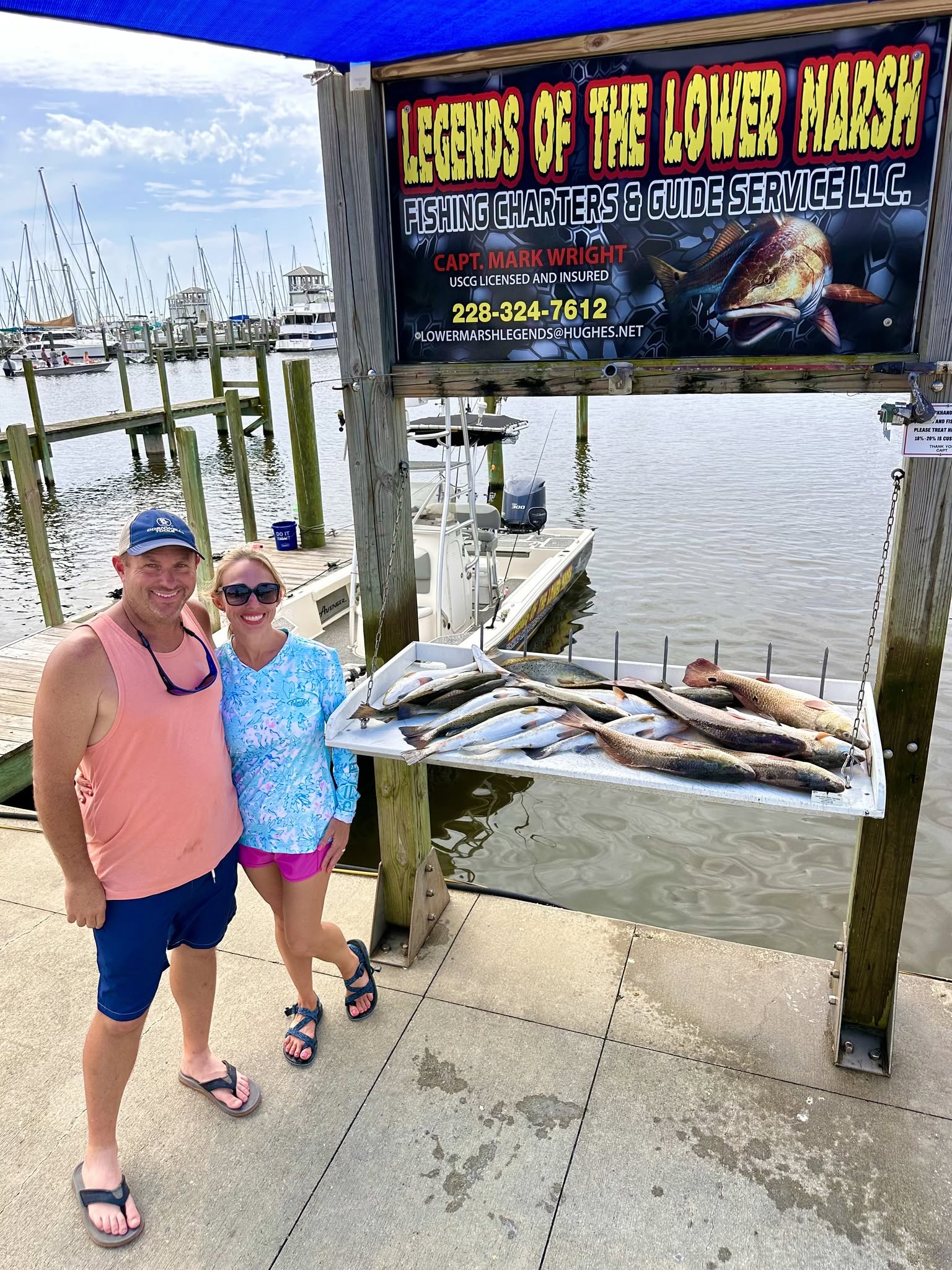
July fishing in Gulfport and the Biloxi Marsh is a high-summer fishery controlled by early starts, moving water, bait concentration, and short weather windows. Speckled trout, redfish, flounder, tripletail, Spanish mackerel, sharks, tarpon, and seasonal red snapper opportunities give anglers several ways to build a productive trip.
The transition from June fishing in Gulfport and the Biloxi Marsh into July makes timing more important. Shallow water heats quickly after sunrise, afternoon thunderstorms become part of daily trip planning, and calm conditions can determine whether the boat stays inside the marsh or moves into Mississippi Sound and nearshore Gulf waters.
The best July plan is rarely to fish one area all day. Productive Gulfport fishing charters begin with the strongest early pattern, then adjust as tide, sunlight, wind, and water clarity change.
How July Conditions Shape the Fishery
July rewards anglers who protect the first few hours of the morning and fish the best portion of the tide deliberately. Trout may feed aggressively before the sun gets high, redfish remain dependable around moving marsh water, and calm seas can open opportunities for tripletail, Spanish mackerel, sharks, tarpon, and other nearshore species.
| July Variable | Effect on the Fish | Best Adjustment |
|---|---|---|
| Early-morning water temperature | Trout and other predators feed more comfortably before shallow water heats up. | Start on current-facing points, shell, grass edges, or bait concentrations before sunrise or shortly afterward. |
| Falling tide | Bait is pulled from marsh ponds, grass lines, drains, and narrow cuts. | Move to pond mouths, creek exits, shoreline drains, and the first nearby depth change. |
| Rising tide | Redfish and bait can spread across shorelines, grass edges, and shallow ponds. | Cover water quietly with paddletails, spoons, live shrimp, or natural bait placed close to cover. |
| Wind and sea conditions | Wind determines water clarity inside the marsh and whether nearshore boat positioning is practical. | Stay in protected marsh water when the Gulf is rough; run nearshore only during a stable forecast window. |
| Visible bait activity | Predators concentrate around bait pods, current seams, birds, markers, and floating structure. | Let visible life determine where to stop instead of spending the morning fishing attractive but empty water. |
| Afternoon storms | Lightning, heavy rain, and sudden wind shifts can shorten the practical fishing window. | Favor morning departures and allow the captain to adjust the route as weather develops. |
The operating order is straightforward: fish the best early tide first, follow bait as the water moves, and let the wind decide whether the second half of the trip stays inside or moves toward open water. That same flexibility drives successful summer fishing across the Mississippi Coast.
- Primary marsh targets: Speckled trout, redfish, flounder, black drum, and other inshore species.
- Primary nearshore targets: Tripletail, Spanish mackerel, sharks, jack crevalle, cobia, and tarpon.
- Primary baits and lures: Live shrimp, croakers, pogies, cut bait, paddletails, topwater plugs, spoons, jigs, and popping-cork rigs.
- Most important July decision: Choosing the best water for the conditions instead of forcing a preferred species or location.
- Most common July mistake: Starting late and spending the most productive hours running between spots.
Five Productive July Fishing Patterns
Early Speckled Trout on Shell and Current-Facing Points
Speckled trout remain an important July target, but their strongest feeding window often occurs early. Outside marsh points, shell pads, grass edges, ledges, and current seams can all hold trout when moving water pushes shrimp and baitfish across the structure.
Start by looking for clean or lightly stained water with visible bait, surface strikes, slicks, or bird activity. Trout water that looks lifeless usually deserves only a brief check. During July, spending an hour waiting for an empty point to become interesting is a fine way to study clouds, but not necessarily to catch fish.
Soft-plastic paddletails on light jigheads allow anglers to cover water efficiently. Live shrimp or small baitfish beneath a popping cork can be especially effective for families and less experienced anglers. Topwater plugs may produce exciting strikes during low-light conditions when trout are feeding near the surface.
Boat position matters. Stay far enough from the point to avoid crossing directly over the fish, cast across the current seam, and allow the lure or bait to move naturally through the feeding lane. Once several bites establish the productive section, repeat the drift rather than driving through it.
This early trout program fits naturally into a Louisiana marsh fishing charter, where the boat can shift from open points to protected drains as the sun rises and conditions change.
Redfish and Flounder Around Falling-Tide Drains
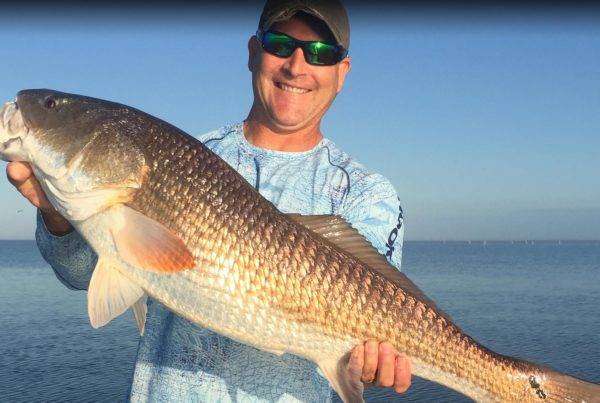
Redfish are among the most dependable July fish in the Biloxi Marsh. They remain active around grass edges, oyster-lined shorelines, pond mouths, narrow cuts, and drains where moving water concentrates forage.
A falling tide creates one of the clearest summer patterns. As water leaves shallow ponds and flooded grass, shrimp, mullet, crabs, and small baitfish are forced through predictable exits. Redfish can hold directly at the mouth, along the downstream edge, or on the first nearby ledge.
Cast beyond the drain and bring the presentation across the current rather than pulling it directly against the flow. Weedless paddletails and spoons are effective when the water is clean enough for fish to chase. Live shrimp, small baitfish, or cut bait can stabilize the bite when the water becomes dirty or fish stop responding to faster presentations.
Flounder frequently use the same areas but hold closer to the bottom. Creek corners, sand transitions, small ledges, and the downstream side of a drain provide ambush positions where a flounder can wait for forage to pass.
Use a jig or Carolina-style rig that maintains bottom contact. Short hops followed by longer pauses are usually more effective than a fast retrieve. A flounder bite may feel like pressure or added weight rather than a sharp strike, so allow the fish to secure the bait before applying steady pressure.
Tripletail and Spanish Mackerel in Nearshore Water
Calm July mornings can open a different fishery outside the marsh. Tripletail may hold near channel markers, pilings, trap floats, debris, and other floating or vertical structure. Spanish mackerel, jack crevalle, sharks, and occasional cobia may gather around bait pods, current lines, and surface-feeding activity.
Tripletail fishing is visual. Approach potential cover quietly, look carefully before casting, and present a live shrimp, small baitfish, jig, or compact artificial close to the structure. Because tripletail may suspend just beneath the surface, an accurate first presentation is usually more valuable than repeated casts from poor boat position.
Spanish mackerel require a faster approach. Birds, showering bait, and sharp surface strikes can reveal a moving school. Small spoons, metal jigs, and baitfish-pattern lures retrieved quickly through the edge of the activity are effective. Casting across the school is generally better than driving directly through it.
These open-water opportunities are best suited to a Mississippi nearshore fishing charter. The captain can check markers and bait concentrations while keeping the marsh available as a backup when wind or visibility deteriorates.
Early-July Red Snapper Fishing
Red snapper can provide powerful bottom-fishing action during the legal Mississippi season, but the 2026 July window is brief. Mississippi’s announced season for private recreational anglers and state for-hire vessels is scheduled to close on July 5, 2026, at 11:59 p.m.
That makes red snapper a specialized early-July option rather than a target available throughout the entire month. A snapper trip requires the correct charter format, legal season timing, suitable sea conditions, and enough trip time to reach productive structure.
Once on the grounds, natural baits are presented around reefs and other hard structure where snapper gather. Strong tackle, controlled drag, and steady pressure help move fish away from cover before they can break the line.
Anglers interested in this limited opportunity should review the dedicated Mississippi red snapper fishing charter and confirm availability directly with the captain before booking. Season dates and regulations should always be checked through the Mississippi Department of Marine Resources.
Summer Tarpon in Mississippi and Louisiana Waters
July falls within the summer tarpon season along the Mississippi and Louisiana coast. These fish may travel through open-water routes, stage near passes, or follow large concentrations of pogies and other forage.
Tarpon fishing is highly dependent on wind, sea state, water clarity, and bait location. Calm conditions make it easier to identify rolling or feeding fish, determine their direction of travel, and position the boat ahead of them. Running directly at each surface roll usually pushes fish away and turns a carefully planned hunt into maritime pinball.
Live pogies and other natural baits can be effective when presented in the fish’s path. Heavy tackle, dependable knots, and a properly adjusted drag are essential. Once a tarpon is hooked, boat handling becomes part of the fight as the fish runs, jumps, and changes direction.
Tarpon trips are different from standard mixed-bag charters. They require patience and may produce fewer total bites, but each opportunity can become the defining moment of the trip. Anglers focused on the Silver King should compare the seasonal details and trip format for Mississippi and Louisiana tarpon fishing charters.
Which July Charter Should You Book?
Louisiana Marsh Fishing
Choose a marsh charter when the priority is speckled trout, redfish, flounder, black drum, and mixed-bag inshore action. Marsh trips offer protected alternatives when the wind makes open water uncomfortable, and the day can be adjusted among points, ponds, drains, grass edges, and deeper channels.
This is often the most flexible July option because the captain can change targets as the tide moves and shallow water heats up.
Mississippi Nearshore Fishing
Choose a nearshore charter when the forecast supports fishing around markers, bait pods, structure, and open-water current lines. Tripletail, Spanish mackerel, sharks, jack crevalle, redfish, and other species can all enter the plan.
Nearshore trips depend more heavily on wind and sea conditions. A calm forecast can produce an active, visual day, while rougher conditions may make the marsh the more productive and comfortable choice.
Red Snapper Fishing
Choose a red snapper trip only when the legal season is open and the captain confirms that the date, trip format, and sea conditions support the run. In July 2026, the announced Mississippi state season is limited to the first five days of the month.
Tarpon Fishing
Choose a tarpon charter when one large, powerful fish matters more than the total number of bites. Tarpon fishing is best suited to patient anglers who are comfortable with longer periods of searching followed by sudden, highly technical action.
Family Fishing
A family fishing charter is a better fit for children, first-time anglers, and groups that value steady action and variety. Early marsh or nearshore trips can be tailored around comfortable conditions, shorter runs, and species that keep multiple anglers involved.
July Fishing FAQs
Is July a good month to fish Gulfport and the Biloxi Marsh?
Yes. July offers dependable redfish, early speckled trout, flounder around current-fed edges, tripletail, Spanish mackerel, sharks, tarpon, and a limited early-month red snapper opportunity. The most productive trips start early, follow tide movement, and remain flexible about water type.
What is the best time of day to fish in July?
Early morning is normally the highest-percentage period. Water temperatures are more comfortable, boat traffic is lighter, and trout and other predators may feed actively before the sun gets high. Morning departures also reduce exposure to the thunderstorms and wind shifts that often develop later in the day.
Is an incoming or outgoing tide better in July?
Both can produce, but the habitat should match the tide. Falling water concentrates redfish and flounder around drains, creek mouths, and pond exits. Rising water allows redfish to move onto grass edges and shallow shorelines. Trout can feed during either direction when clean current crosses shell, points, and bait concentrations.
Should a July trip stay in the marsh or go nearshore?
Stay in the marsh when wind is strong, open water is rough, or protected areas offer better clarity. Go nearshore when seas are manageable and bait activity makes markers, floating structure, and open-water feeding zones worth checking. The forecast should choose the water type; enthusiasm does not flatten waves.
Can anglers catch red snapper during July 2026?
Mississippi’s announced 2026 season for private recreational anglers and state for-hire vessels runs through July 5 at 11:59 p.m. Red snapper availability therefore applies only to the beginning of July and must be confirmed before booking.
Are tarpon available in July?
Yes. July is within the summer tarpon season in Mississippi and Louisiana waters. Tarpon trips remain condition-dependent because wind, sea state, water clarity, and bait location determine whether fish can be located and approached effectively.
Is July fishing suitable for children and beginners?
Yes. A morning marsh or nearshore trip can be tailored to beginners and families. Live-bait fishing around productive points, drains, markers, or structure can provide steady action without requiring advanced casting skills.
What should guests bring on a July charter?
Bring drinks, snacks, sunscreen, polarized sunglasses, a hat, lightweight sun-protective clothing, non-marking shoes, and any necessary personal medication. A lightweight rain jacket is also useful during summer.
Legends of the Lower Marsh provides rods, reels, bait, lures, fuel, and ice in the boat’s cooler on its standard fishing trips. Legal harvested fish are cleaned and bagged. Current trip inclusions and pricing are listed on the charter rates page.
Do charter guests need a fishing license?
Licensing requirements depend on whether the trip fishes Mississippi or Louisiana waters. The company’s fishing charter FAQ explains the current requirements, but guests should confirm licensing and permit details with the captain before departure.
Plan a July Fishing Trip With Legends of the Lower Marsh
July gives anglers several legitimate options, but the best trip is the one matched to the day’s conditions. A calm morning may open nearshore water for tripletail, mackerel, sharks, or tarpon. Windy conditions may favor protected marsh points and drains for trout, redfish, and flounder. During the first few days of July 2026, an eligible red snapper trip may also be available.
Legends of the Lower Marsh fishes the Mississippi Coast, Mississippi Sound, barrier islands, and Louisiana’s Biloxi Marsh. Trips can be tailored to experienced anglers, families, children, and first-time fishermen, with the target species and route adjusted around tide, wind, water clarity, and seasonal regulations.
For a broader look at how July fits into the year, review the Gulfport and Biloxi Marsh 2026 fishing guide. Recent catches and conditions are available in the latest Mississippi and Louisiana fishing reports.
Ready to plan your July fishing trip? Call 228-324-7612, begin the process through online charter reservations, or contact Legends of the Lower Marsh to match your preferred date with the best tide, target species, and trip format.