Last Updated on September 25, 2026 by Eric Bonneman
October fishing in Gulfport and the Biloxi Marsh brings redfish, speckled trout, and changing marsh conditions to the center of the season. Cooler nights, moving shrimp, and the passage of fall cold fronts begin reshaping where fish feed. A shoreline that holds redfish on higher water may give way to a productive drain as the tide falls, while trout gather around shell, bayou mouths, and bait moving through the marsh.
At Legends of the Lower Marsh, we build our October trips around those changes. Our Louisiana marsh fishing charters focus on redfish, speckled trout, and mixed inshore action, while Mississippi coastal waters offer additional opportunities when the forecast supports the trip. The goal is to match the route, target species, and fishing style to the conditions rather than treat every October day the same.
What Changes About the Fishing in October?
The transition that starts during September fishing around Gulfport and the Biloxi Marsh usually becomes more noticeable in October. Summer heat can linger, especially early in the month, but it is no longer the only factor shaping the day. Water levels, wind direction, bait movement, and the timing of cold fronts become increasingly important.
That does not mean every cool morning produces an easy bite. A strong front can lower water levels, muddy exposed shorelines, and make open-water travel uncomfortable. Once conditions settle, the same changes can help concentrate fish around accessible drains, deeper edges, and remaining bait.
| October Condition | What It Can Mean | Fishing Adjustment |
|---|---|---|
| Gradually cooling water | Shallow feeding opportunities can extend beyond the short early-morning window of summer. | Choose productive tide periods instead of assuming the bite ends soon after sunrise. |
| Shrimp and baitfish movement | Food becomes concentrated around pond exits, bayou mouths, points, and current seams. | Look for jumping shrimp, bait movement, feeding birds, and surface activity. |
| Falling water | Fish may leave flooded grass and shallow ponds for nearby drains and deeper edges. | Follow the available water rather than continuing to fish an empty shoreline. |
| Cold fronts and stronger winds | Water levels, clarity, and crossing conditions can change quickly. | Reevaluate the entire route, including the ride back to the marina. |
| Stable weather between fronts | More shorelines and open-water options may become practical. | Use the opportunity to work productive marsh edges, shell, and Mississippi coastal structure. |
Best Fish to Target in October
Redfish Around Marsh Drains, Grass Edges, and Shell
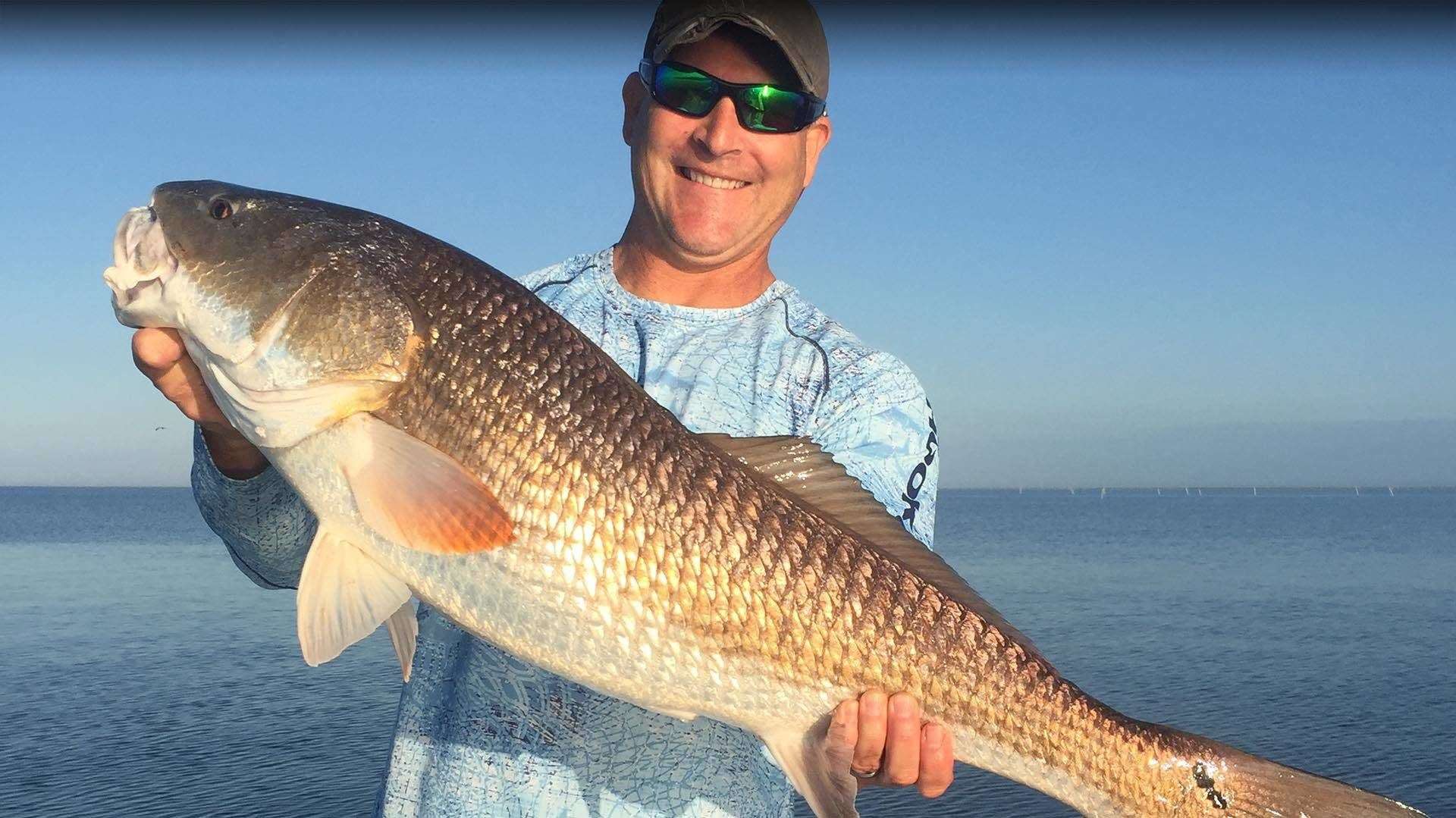
October falls within a productive stretch for redfish fishing in Louisiana and Mississippi. Fish feeding along shallow shorelines give anglers opportunities to work live bait and artificial lures around grass, shell points, pond mouths, and small cuts.
Water level helps determine where to begin. With enough water over the shoreline, redfish can spread into flooded grass and shallow pockets. As that water drains away, nearby exits and the first deeper edges become more important. A narrow opening carrying shrimp and small baitfish can be more productive than a long stretch of shoreline with little movement.
Live shrimp, small baitfish, cut bait, weedless soft plastics, and spoons all have a place in the October plan. In clearer water, a quiet approach and a cast placed ahead of a moving fish can make the difference. When visibility is limited, a slower presentation that stays close to the feeding area is often a better starting point.
Larger redfish may also provide opportunities around more open coastal water and substantial bait concentrations. These fish call for tackle suited to a strong fight and careful handling at the boat. In Louisiana waters, redfish longer than 27 inches must be released under current regulations.
Speckled Trout Following Shrimp and Moving Water
Speckled trout are another main October target. As fall develops, bayou mouths, shell edges, interior bays, and current-swept points become useful places to look for feeding fish. The important combination is not simply shallow water or deep water. It is food, water movement, and a place where trout can feed efficiently.
Jumping shrimp and birds repeatedly dipping over the same area deserve attention, but birds are not required to find trout. Bait flicking along a shoreline, a productive shell edge, or a deeper bend beside a drain can also be worth working.
Live shrimp beneath a popping cork is a practical option when fish are feeding over shallow shell or along marsh edges. A soft plastic on a jighead allows more control when trout hold deeper or current makes a cork difficult to manage. Topwater plugs can be effective during suitable low-light conditions, particularly when baitfish are active near the surface.
Once fish are located, boat positioning matters. Work the productive water from a distance and avoid repeatedly running through the area. A controlled drift or a stationary presentation can keep baits in the feeding zone without scattering the school.
Our approach to fall speckled trout fishing in the Biloxi Marsh changes with the weather. After a sharp temperature drop, checking a nearby deeper edge and slowing the presentation may be more useful than continuing to work the same shallow pattern.
Flounder Along Bottom Changes and Marsh Exits
Flounder can be part of the October catch around drains, sandy pockets, channel edges, and other places where moving bait passes close to the bottom. A live bait or soft plastic worked slowly through those areas gives an ambush-feeding fish time to find the presentation.
Keep enough contact with the bait to recognize a bite without dragging excessive weight across the bottom. A flounder bite may register as a light tap or unexpected pressure rather than a hard strike.
Louisiana’s southern flounder harvest and possession closure runs October 15 through November 30. That makes the date especially important for trips into the Biloxi Marsh. Beginning October 15, any southern flounder caught incidentally on Louisiana trips must be released promptly. Review the current Louisiana saltwater fishing regulations before planning to keep fish.
Mississippi has separate flounder regulations. A trip departing from Gulfport does not automatically follow Mississippi rules once it enters Louisiana waters.
Black Drum and Sheepshead Around Structure
Black drum and sheepshead provide additional possibilities around shell, pilings, and other structure. They are useful targets when a group enjoys fishing natural bait close to cover rather than spending the entire trip casting shorelines.
Shrimp presented near the bottom can draw bites from both species. Sheepshead require particular attention because their bites can be subtle. Keep slack under control, stay close to the structure without constantly snagging it, and be ready when the bait stops moving naturally.
How Cold Fronts Affect an October Charter
A fall front changes more than the air temperature. Wind can push water out of shallow areas, reduce visibility along exposed banks, and alter which shorelines remain practical to fish. The difference between a productive drain and an inaccessible pond can come down to how much water is actually present.
Before a front, comfortable conditions may allow us to cover more water. During its passage, wind and storms may require a change of route or a rescheduled trip. Afterward, the fishing plan depends on how far water levels have fallen, how quickly the water clears, and where bait remains concentrated.
We also consider the water between the marina and the fishing grounds. Louisiana’s Biloxi Marsh offers sheltered fishing areas, but reaching them from Gulfport involves open-water travel. A protected destination does not guarantee a safe or comfortable crossing of Mississippi Sound.
October also remains within Atlantic hurricane season, which continues through November 30. We keep an eye on tropical conditions as well as approaching fronts. The National Hurricane Center’s seasonal overview explains why tropical weather still belongs in fall trip planning.
Choosing the Right October Fishing Charter
Louisiana Marsh Fishing for Redfish and Trout
A marsh trip is a strong choice for anglers interested in working shorelines, drains, points, and shell for redfish and speckled trout. It allows us to adjust presentations as water levels change and move between different types of habitat during the day.
This is also a good fit for anglers who enjoy learning how the marsh works. Watching bait leave a pond and then catching fish near the exit makes the relationship between tide, food, and fish easy to understand.
Mississippi Nearshore Fishing for Coastal Variety
Our Mississippi nearshore fishing charters offer another way to fish the fall transition. Redfish, speckled trout, sheepshead, and other coastal species provide options around suitable shorelines, structure, and bait concentrations.
The forecast helps determine which areas are practical. We do not need to force a long run to make an October trip worthwhile, and we do not treat calm conditions at the dock as a promise that exposed water will stay comfortable all day.
Family Fishing With a Flexible Plan
For children, beginners, and groups with different experience levels, a family fishing charter keeps the emphasis on an enjoyable day together. We can choose manageable presentations and target a variety of fish rather than requiring everyone to spend the trip pursuing one difficult bite.
Let us know the ages of children, the group’s fishing experience, and any concerns about the boat ride when discussing a date. Those details help us recommend a trip that fits the whole group.
Fishing Licenses and Harvest Rules
Mississippi and Louisiana have separate fishing-license requirements, size limits, and possession rules. We plan around the waters being fished and the requirements that apply to the catch, including any relevant transportation and landing rules.
Our charter license covers guests on Mississippi fishing trips. Louisiana trips require the appropriate Louisiana fishing privileges. Guests who need a license can use Louisiana’s three-day Charter Passenger Saltwater license when fishing aboard a charter vessel with a licensed guide. Age-based exemptions and existing licenses may affect what an individual guest needs.
We will discuss those requirements before a Louisiana trip. Guests can also review the Louisiana charter-passenger licensing information and the Mississippi recreational catch limits before departure.
Legal fish may be kept within the applicable limits. Closed-season fish, undersized fish, and fish outside an allowed harvest range must be released. The October flounder closure is particularly important, but it is not the only rule that can differ between the two states.
What to Bring on an October Fishing Trip
Dress for a cool boat ride and a potentially warm afternoon. Layers are more useful than assuming October will feel like either summer or winter for the entire trip.
- Comfortable clothing and a wind-resistant outer layer: Bring a light jacket or rain shell that can be removed as conditions warm.
- Sun protection: Pack polarized sunglasses, a hat, and sunscreen. Cooler air does not remove the glare from the water.
- Drinks, snacks, and personal essentials: Bring what your group needs for the trip, including any personal medication.
- A cooler for the ride home: Have a way to transport cleaned fish when you plan to keep a legal catch.
Our standard fishing trips include rods, reels, bait, lures, fuel, and ice in the boat’s cooler. We also clean and bag legally harvested fish. You can compare trip lengths and current pricing through our fishing charter options and rates.
October Fishing FAQs
Is October a good month to fish Gulfport and the Biloxi Marsh?
Yes. October offers good seasonal opportunities for redfish and speckled trout, with flounder, black drum, sheepshead, and other species adding variety. The quality of an individual trip still depends on water movement, bait, weather, and access to productive fishing areas.
Do we need to start before sunrise?
Not necessarily. Early departures can be useful, but October fishing is not limited to the first hour of daylight. Tide timing, travel conditions, and the weather around a cold front may matter more than choosing the earliest possible start.
Can we keep flounder in October?
The answer depends on the date and the waters involved. Louisiana’s southern flounder harvest and possession closure begins October 15 and continues through November 30. Mississippi follows separate regulations, so we confirm the applicable rules for the planned trip before keeping fish.
Is the Biloxi Marsh in Mississippi?
The Biloxi Marsh we fish is in Louisiana. Our trips depart from Gulfport, Mississippi, which is why Louisiana licensing and fishing rules can apply even though the boat leaves from a Mississippi marina.
How many anglers can come on a trip?
Our standard fishing charters accommodate up to four anglers. Larger groups can be coordinated using additional boats. Tell us your group size when discussing availability so we can recommend the right arrangement.
Where do we meet for the charter?
We meet at Gulfport Municipal Marina. Confirm the departure time and dock details with us before the trip, especially when weather affects the schedule. Our fishing charter FAQs cover additional planning details.
Plan Your October Fishing Trip With Legends of the Lower Marsh
October gives us several ways to put together a rewarding day on the water. We may work marsh drains for redfish, follow shrimp and current for speckled trout, or choose Mississippi coastal fishing when the conditions fit. The best plan begins with your group’s goals and stays flexible enough to follow the fish and the weather.
Browse our Gulfport and Biloxi Marsh fishing reports for seasonal updates, then get in touch to discuss an October date.
Call Captain Mark Wright at 228-324-7612 or contact Legends of the Lower Marsh to plan your trip. Once we have confirmed your date and trip details, you can secure your reservation with an online deposit.